

TL;DR:
Why ads in Google’s AI Mode will completely change how customers search and shop
The difference between keyword targeting and conversation targeting and why it matters
How your brand profile now is your targeting strategy
Why your Google Ads account is becoming an AI training system for your business
The million-dollar question: will users actually click ads inside AI conversations?
Exact steps to prepare your business before competitors adapt
We all thought ChatGPT might kill Google.
And to be fair, it almost did.
In just three years, ChatGPT hit 700 million active users, forcing Google to face something it hadn’t in 25 years: competition that could actually change how people search.
So Google did what only Google can do, it didn’t fight the change.It became the change.
And what’s rolling out now is the biggest update to Google’s business model in its entire history.
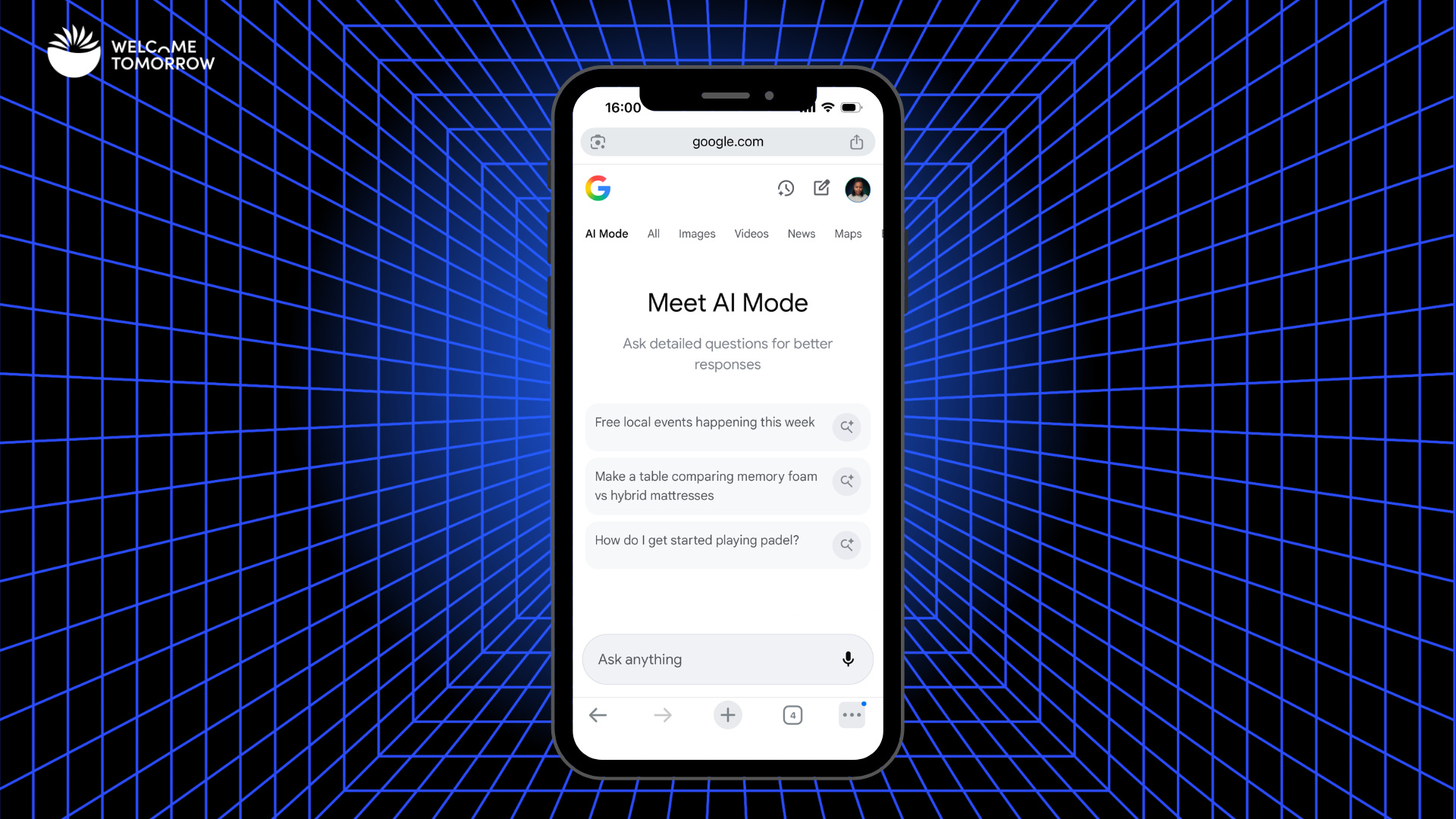
Ads are moving inside Google’s new AI mode, and it’s about to change everything about how people search, shop, and discover brands online.
Let’s break down what that actually means and what marketers need to start doing right now.
🧨 Google Just Killed Its Own Cash Cow
For two decades, Google’s empire was built on one simple idea:
you type → you click → they get paid.
That click-based model brought in over $200 billion last year. But now Google is breaking that model on purpose.
Why? Because user behaviour has changed.
AI tools like ChatGPT taught people to expect answers, not links.
We don’t want to scroll through ten websites, we want context, recommendations, and conversation.
Google saw that and made a risky but brilliant move:
own the new behaviour before it owns them.
In Google’s new AI mode, you won’t just get a list of links, you’ll have an ongoing chat.
You’ll ask questions, clarify, and go deeper… all within Google’s interface.
And since users will spend more time inside Google (instead of clicking away), there are way more opportunities for the company to show ads, gather intent data, and keep you in its ecosystem longer.
It’s a big bet but it’s one that will reshape how online marketing works.
💬 The Death of Keywords (and the Birth of Conversations)
For years, Google Ads revolved around keywords, those little phrases like “best running shoes” or “pizza near me.”
But that’s not how humans talk anymore.
In AI mode, a search might sound like this:
“I’m training for my first marathon and I overpronate. What’s the best running shoe for under $300?”
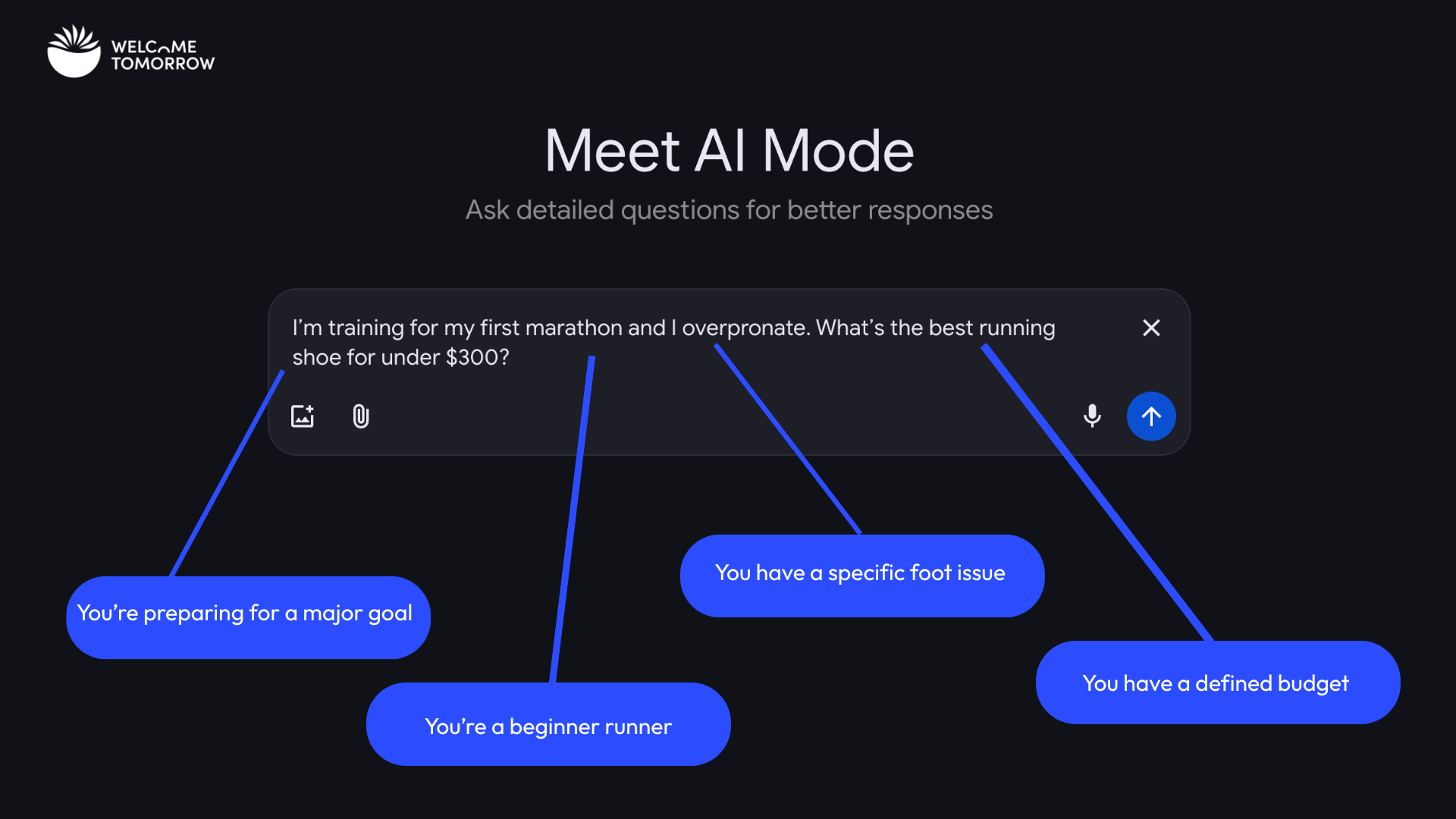
That’s not a keyword search, that’s a conversation.
And it tells Google so much more:
You’re a beginner runner.
You have a foot issue.
You have a budget.
You’re training for a specific goal.
Now imagine the AI knowing that you’ve been watching YouTube videos on “marathon training” and recently bought a smartwatch.
That’s next-level context.
So instead of bidding on specific words, advertisers will compete for conversation relevance meaning your ad shows up if the AI determines that what you sell fits naturally into the user’s intent.
It’s no longer about who ranks for “running shoes.”
It’s about who fits the story being told in that search conversation.
🧠 Your Brand Is Now Your Targeting Strategy
This is where things get really interesting.
Google’s AI is now “reading” your brand everywhere it exists online: your website, reviews, social media, product descriptions, even how customers talk about you.
And all of it contributes to what’s called your brand profile.
If your online presence is strong, consistent, and trustworthy, Google’s AI will recognise you as a relevant, high-quality brand.
But if your website looks dated, your reviews are inconsistent, or your product data is messy…
You’re literally training the system to work against you.
Google calls this feed hygiene. In plain language:
garbage in, garbage out.
It means your content, product descriptions, and brand assets now directly influence how your ads perform.
Let’s say someone asks AI,
“What’s the best laptop for video editing under $1,500?”
If your product feed only lists specs like “Intel Core i7, 16GB RAM,” that’s not enough.
Google wants to see conversational details like “ideal for creators, handles 4K editing with ease.”
Basically, your content is now your targeting.
And your brand story is part of the algorithm.
⚙️ Your Google Ads Account = An AI Training System
Your Google Ads account isn’t just running campaigns anymore.
It’s training an AI model to understand your best customers.
Every conversion you track, every customer signal you import, it’s all teaching Google what “success” looks like for your business.
If you only track leads, you’ll get more leads but not necessarily good ones.
If you track repeat buyers or high-value customers, the AI starts learning who to prioritise.
Think of it like training a dog.
If you reward it for sitting, it sits.
If you reward it for rolling over, it rolls.
Google works the same way, it doubles down on whatever you signal as valuable.
So instead of micromanaging keywords and bids every day, your job now is to:
Feed Google high-quality data
Define what a “valuable customer” actually means
Let smart bidding systems (like Performance Max) optimise for that
And here’s the cool part:
this intelligence compounds over time.
The longer you feed it good data, the smarter and more profitable it becomes.
💸 The Million-Dollar Question
Everyone’s asking:
“If people stay inside AI conversations, will they still click ads?”
Maybe not as much.
But the ones who do? They’ll be way more ready to buy.
When someone spends five minutes talking to AI about their goals, challenges, and budget, by the time they see your ad, they’re deep in consideration mode.
That’s higher-intent traffic ,and it’s golden.
We don’t know exactly how Google will price this new world (per click? per impression? per in-chat conversion?),
but we do know this:
the brands that start adapting now will have a massive head start once the system fully rolls out by Q4 2025.
Because the more data you train the AI with today, the smarter it’ll be tomorrow and that advantage compounds.

🚀 So, What Should You Be Doing Now?
Here’s your action plan for this new era of search:
Audit your brand hygiene.
Make sure your website, product feeds, and social content are consistent, up to date, and conversational.Adopt Google’s new campaign types early.
Start using Performance Max and Search Max, they’re the first to integrate with AI mode.Feed better data.
Go beyond keywords. Include intent-rich details in your product and ad copy.Train for long-term value.
Track the customers who matter most, not just who clicks first.Think conversations, not campaigns.
How would your brand show up in a chat between a user and Google AI? That’s your new brief.
Welcome Tomorrow x DMA Growth Lab 2025
Thank you to everyone who joined us for our last Growth Lab of the year!


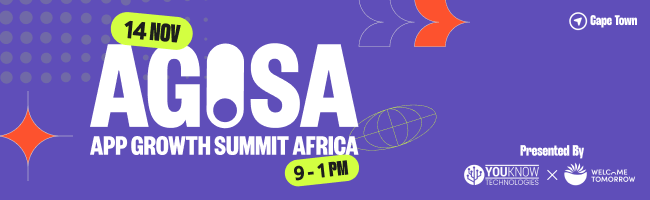
📅 Come hang with us at AGSA! 🇿🇦
Back with our friends at YOUKNOW for another deep dive, this time, we’re bringing app marketers and product people together in Cape Town for a full day of real, no-BS conversations on how to acquire, activate, and retain users. 📲”
Join Our Community 👥
We invite you to join our community by subscribing to our blog and following us on social media. Stay connected and be part of the conversation as we continue to navigate the dynamic world of growth marketing. 🤝🏾