

TL;DR:
The install isn’t the win. In 2025, South African brands are spending R5.91 billion on app ads, yet 90% of users churn within 30 days.
Retention is broken by silos. Tech, Product, and Marketing still operate like separate planets and that structure is the root cause.
Creative testing is the new growth engine. Marketing and Product must share real-time creative insights to identify what actually drives retention.
Day 7 Stickiness = the new north star. If 7% of new users return and complete a core action on Day 7, you’re on track for top-tier retention.
CAC is up 60% since 2020. If you’re not building user habits, you’re burning money.
Loyalty is pragmatic, not emotional. Predictive analytics + empathy = the new retention model.
AGSA 2.0 happened in Cape Town on the 14th of November, and instead of giving you a dramatic “you had to be there” recap, I’m just going to tell you plainly what happened and why the conversations were more honest than most industry events are.
It was a day about the real problem almost every brand in the room admitted they’re struggling with: keeping users.
Here’s the rundown 😁
1. The Numbers Everyone Needed to Hear
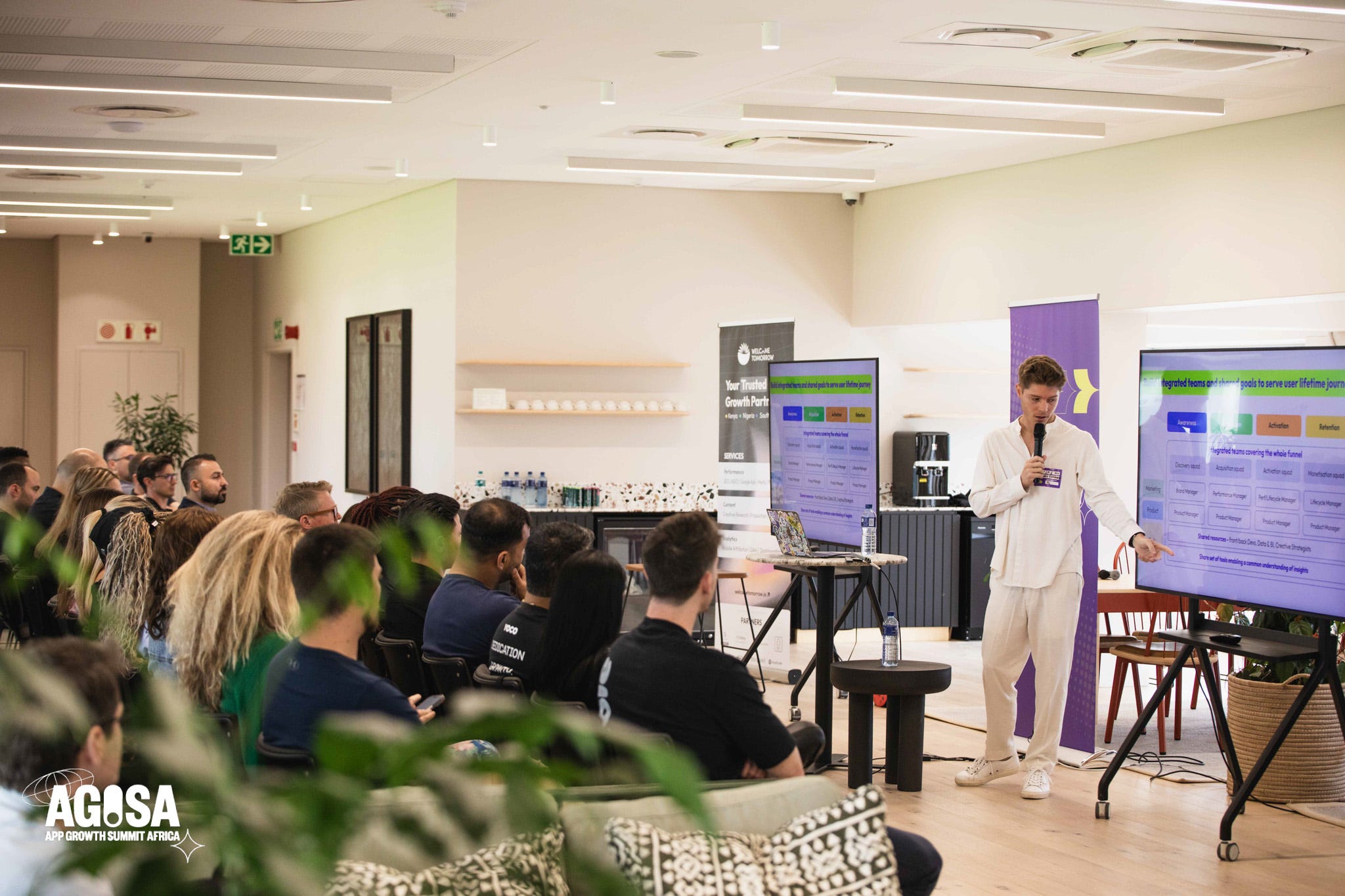
Maxime kicked things off with a truth bomb.
We are pouring billions… seriously, R5.91 billion projected in South African app advertising alone in 2025 into a system designed to fail.
We’ve treated the install like the winning goal, but the data shows it’s usually just the moment the money starts haemorrhaging, because 90% of app downloaders churn within 30 days 🤯.

And yes, that number is exactly as wild as it looks.
The problem, he argued, is fundamentally structural: Retention is trapped between the silos. We have Tech, Product, and Marketing teams, each operating with different goals and incompatible work habits.
You simply cannot fix the leak until these functions are horizontally integrated, working toward a shared outcome. The mandate is to stop celebrating the initial “high five” (the install) and start engineering the handshake (activation) and the relationship (retention).
2. The Creative Feedback Loop

Izak dove into the crucial tactical element that connects the Marketing team to the Product team: Creative Testing.
Izak’s insight was essential: The true test of integration isn’t just shared meetings, but a shared Creative Feedback Loop. You must systematically collect data from creative tests and user reviews to continuously develop new concepts and identify which messaging truly drives retention, not just clicks.
This ensures your creative spend is directly linked to sustained product usage, making the creative team an engine for product health, not just ad clicks.
3. AppsFlyer: Remarketing Isn’t Optional Anymore
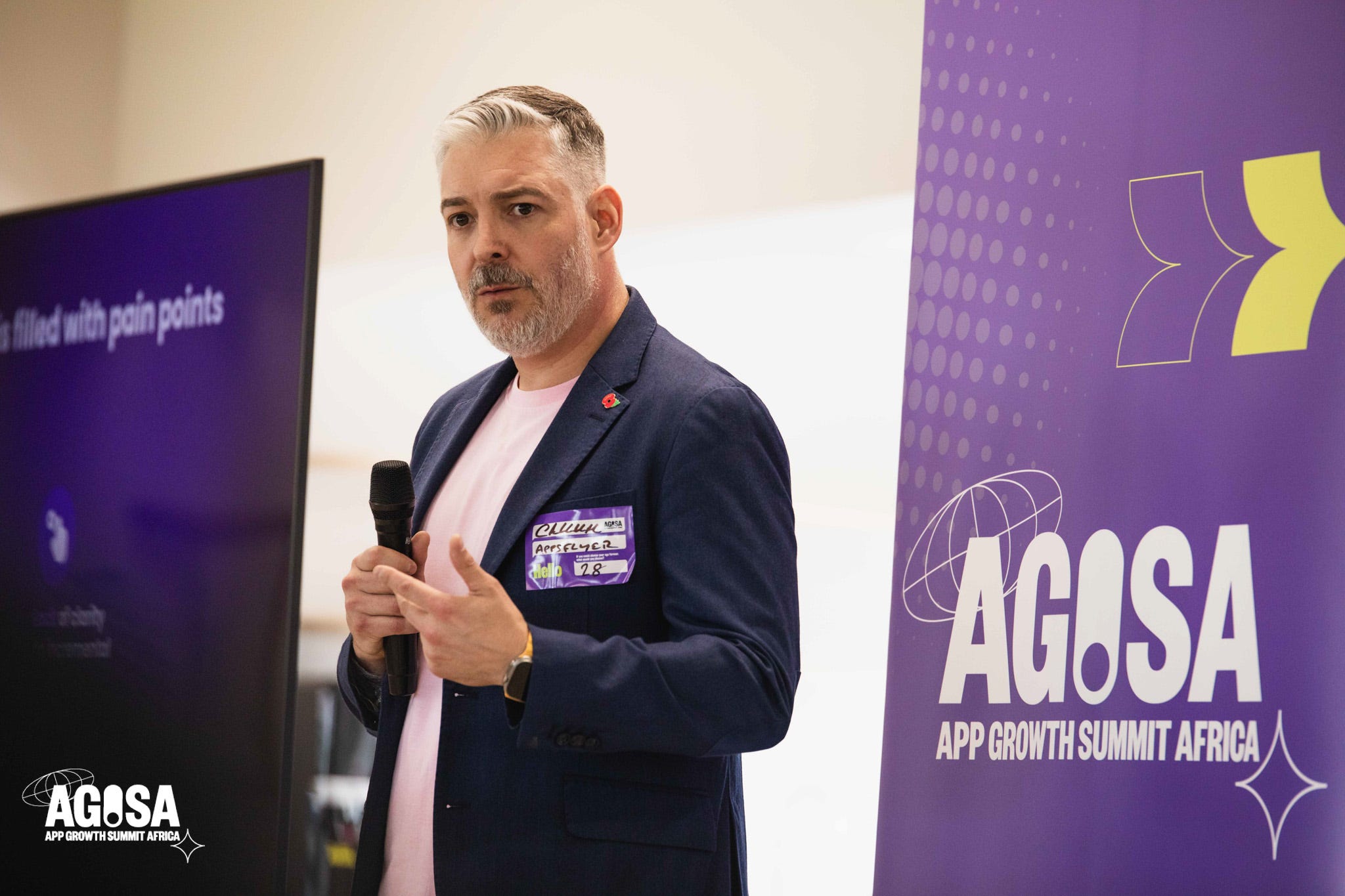
Callum Carmichael from AppsFlyer had the irrefutable data, showing exactly where the smart money is moving, and it confirms the pivot we’ve been talking about. Forget the costly scramble for new downloads. The big, powerful trend? Remarketing.
The financial data confirms it: overall remarketing spend in South Africa jumped an insane 48% in the first half of 2025, showing this as a massive, structural budget reversal. This urgency was led by the Finance sector, which posted a shocking 97% increase in their Android remarketing budget, proving that this isn’t just a trend.
Callum’s biggest warning was critical. Stop wasting budget by running generic “download the app!” ads to users who already have it. Instead, we need to treat remarketing as strategic, empathetic communication. Messages tailored to a user’s exact journey stage, turning a desperation plea into an intelligent, valuable engagement that drives higher ROI.
4. Amplitude: The 7% Mandate

Emrah Çetin from Amplitude dropped the ultimate mic-drop moment, giving us the one metric that links product success to marketing spend.
He proved that acquisition performance has zero correlation with retention. You can be the king of clicks and the king of churn simultaneously. The true gold standard, he revealed, is the 7% Mandate: If at least 7% of your new users return and complete a critical core action on Day Seven, your product is highly likely to be in the top tier for three-month retention.
That single metric shifts the whole focus! It means the goal isn’t the click, it’s to engineer the product experience so that a habit is formed by the first week. The job of the modern marketer isn’t tactical execution but strategic direction, identifying the “stickiest features” and ensuring the user experiences that value within the first seven days.
5. YOUKNOW: Your Highway to the Habit Zone

To truly understand why that 7% stickiness mandate is now non-negotiable, we have to grasp the raw economics and psychology behind it. Don Packett delivered the essential context for this new retention obsession.
He didn’t mince words on the financial crisis: Customer Acquisition Costs (CAC) have exploded, increasing by a massive 60% between 2020 and 2025. Think about that.It costs you over half again what it did just five years ago to get one user in the door. When the entry fee is that high, you simply cannot afford to lose them.
Don’s crucial insight came from psychology, defining a habit as that acquired behaviour pattern that becomes almost involuntary. This is the “Highway to the Habit Zone”. The companies that are actually winning, the ones posting growth despite the massive CAC, leverage these habit formation principles, grounded in Product-Led Growth (PLG), to create products users literally “can’t live without”.
The message is clear: Retention isn’t a feature; it’s a forced psychological loop. You’re no longer marketing a product, you’re marketing a routine that seamlessly integrates into the user’s daily life.
6. The Panel: Loyalty Is Not Sentimental, It’s Pragmatic
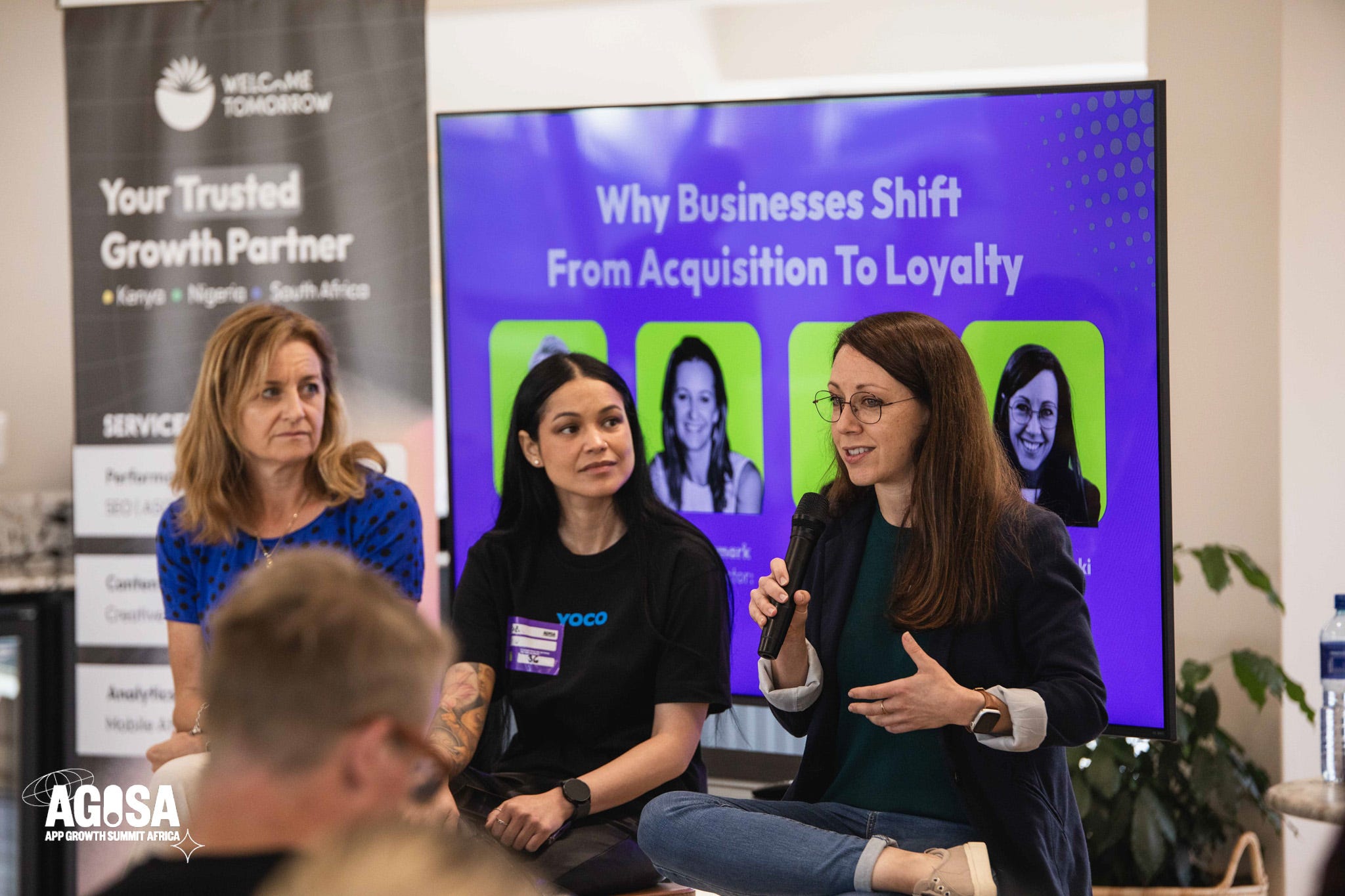
AGSA closed with a powerful panel discussion titled “Why businesses shift from acquisition to loyalty.” The group, featuring Kelvin Jonck (YOUKNOW Technologies), Sarah Utermark (MMA), Nakita Bam (Yoco), and Leigh Stefanski (Now Boarding), took the conversation beyond metrics and into human behaviour.
They explored how retention is becoming the new acquisition and debated what “loyalty” truly means in 2025. The key takeaway was the critical balance between predictive analytics and empathy: you must use data to build lasting connections, focusing on the crucial, human “nice thing factor.”
For example, your analytics might predict a user will abandon their shopping cart, but instead of sending a generic “10% off” coupon, the “nice thing factor” means sending a personalised, human(not a bot) email checking if they faced a technical issue. It’s about leveraging data to know what to say, but using empathy to know how to say it, making the customer feel seen, not just sold to.
The New Strategic Mandate: What This Means for Brands
The Core Value Driver (Your New KPI): Forget the install. The metric that governs the entire value chain is Day 7 Stickiness. Your mandate is to track and achieve the 7% mandate.
The Strategic Leverage: Your sole point of differentiation is the quality of your strategic input. This requires forcing the Tech, Product, and Marketing teams into a unified structure to define and reinforce the single core behaviour that triggers user retention.
Ready to finally fix the 90% app churn rate? Contact our App Growth Experts today.
You came, you saw, you networked 🙌🏾
Now here’s the photographic evidence 😁


Recently on the blog 👩🏽💻
Join Our Community 👥
Come hang with us. Check out the blog, follow along on socials, and stay in the loop as we share the wins, lessons, and experiments shaping growth marketing today. 🤝🏾
PS: The really good stuff? You’ll find that on our TikTok. 👀😂
Got big goals? Good 🤝🏾
Tell us where you are and where you want to be and we’ll help get you there.