

TL;DR- the questions we are answering below:
How can one implement SEO for a personal brand?
Which tools do you use to track AI citations?
Technical SEO is fine, Googlebot can crawl, but Ahrefs/Semrush cannot. Blog just created, no progress yet, what is going on?
What are the highest-leverage activities for young startups? Can topical authority compensate for brand age?
How does this strategy apply to apps?
Do you give website audits pro bono? We offer something even better!
Yesterday, 57 of you joined our first ever webinar on SEO, AEO and GEO. Thank you for that, genuinely. We had a full run of sharp questions by the end, and rather than keep everyone on the call longer than planned, we promised to answer them properly here instead. You had work to get back to, and these answers deserved more than a rushed reply in the last five minutes.
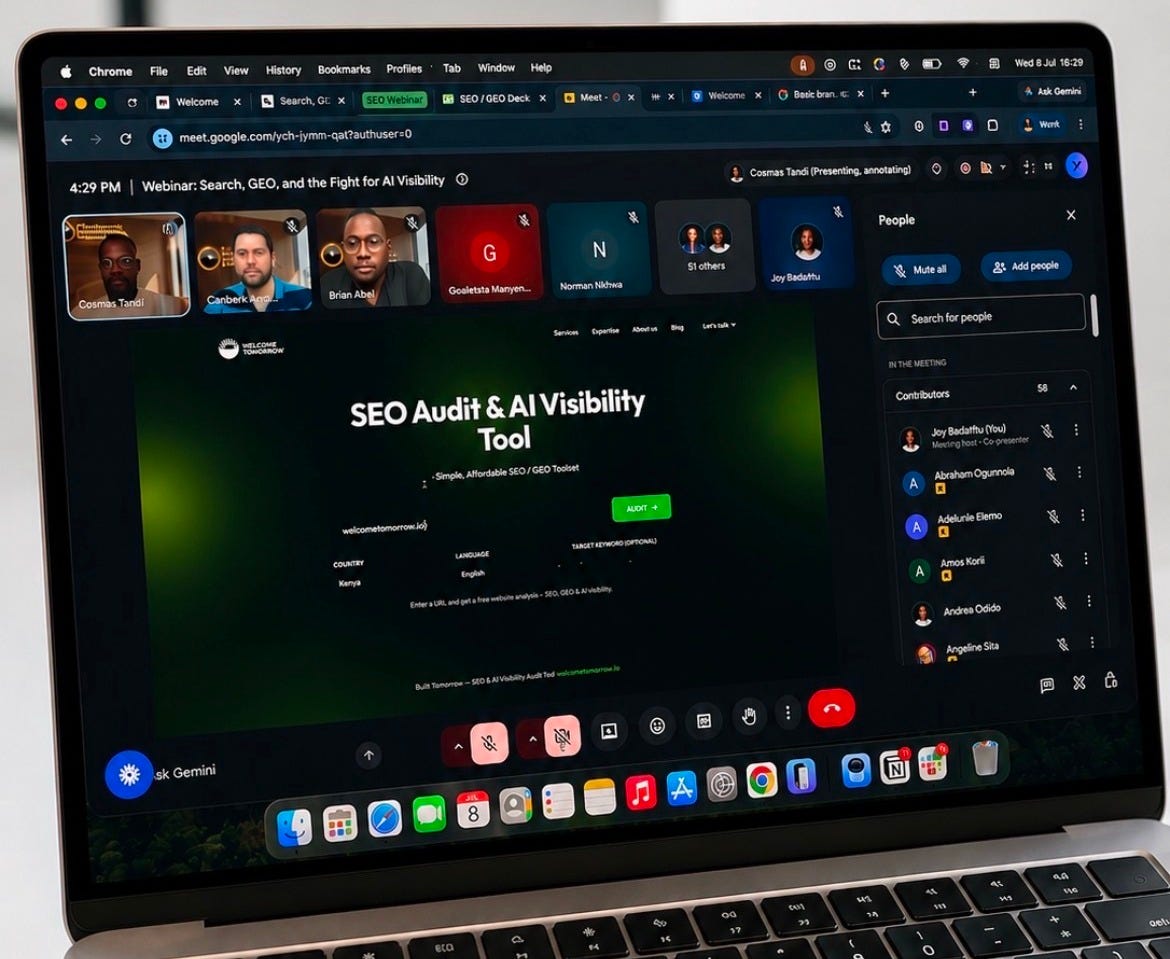
So, as promised, here they are in full.
1. How can one implement SEO for a personal brand?
Social media platforms are very important for personal brands. First, focus on what appears when somebody searches for your name. You need a personal website connected to your social accounts that explains what you do very clearly. That is the first place to focus on. Then, become visible where your industry lives: if there is a website that regularly publishes articles, try to write a guest post for them; if there are podcasts or video casts in your industry, try to be a guest on them. Also, check competitors for your target queries: who is appearing, and what are they already doing?
2. Which tools do you use to track AI citations?
We mostly use Ahrefs and Promptwatch, but new tools for AI citation tracking are appearing every day, so we are closely watching the space and trying new tools regularly.
3. Technical SEO is fine, Googlebot can crawl, but Ahrefs/Semrush can’t. Blog just created, no progress yet.
First, the detail about Ahrefs/Semrush not being able to crawl is worth checking: it is usually a firewall or CDN setting (Cloudflare, for example) blocking non-Google bots. This is not a direct Google problem, but the same setup often blocks AI crawlers like GPTBot, ClaudeBot and PerplexityBot too, and if you cannot be crawled by them, you cannot be visible in AI answers. So, check your bot access rules before anything else.
Beyond that, we are probably talking about a very new brand here. New brands and websites need more time to become visible on Google, and the same goes for AI. You shouldn’t think of Google as your only marketing channel; start focusing on other efforts like social media, and give Google some time. Keep up your efforts consistently. Also, check the long-established brands ranking for your target searches and try to find what’s missing on your side.
4. Highest-leverage activities for young startups. Can topical authority compensate for brand age?
Third-party mentions are the first thing to focus on, and you need to find niche angles. For example, if a long-established competitor is focused on “bookkeeping,” you should first focus on “bookkeeping for X,” especially if you are targeting a specific audience group. On topical authority: it cannot fully replace brand age, but it can realistically win you a sub-topic. If you cover a niche deeply and your third-party mentions come from that same niche, LLMs start to associate your brand strongly with that specific topic, and that association can beat a bigger but more generic competitor there. So, the strategy is not competing with the big brand everywhere; it is becoming the obvious answer for one well-defined area first, then expanding.
5. How does this strategy apply to apps?
Study what appears when people search “best apps” in your category on ChatGPT and Google, and where those brands appear. You will probably find some listicles featuring your existing competitors, so getting included there is key. ASO also matters here: app queries in LLMs often surface App Store and Google Play listings directly, so your app title, description, and especially reviews and ratings become part of your AI visibility. Ratings also decide whether listicle authors include you at all, so they work on both fronts. You could also have a website to improve web-to-app conversions, with experience-focused content for your industry. And it really depends on the category; in some of them, Reddit threads dominate these answers rather than listicles, so check which sources actually appear for yours.
6. RankTomorrow: our answer to “do you do audits pro bono?”
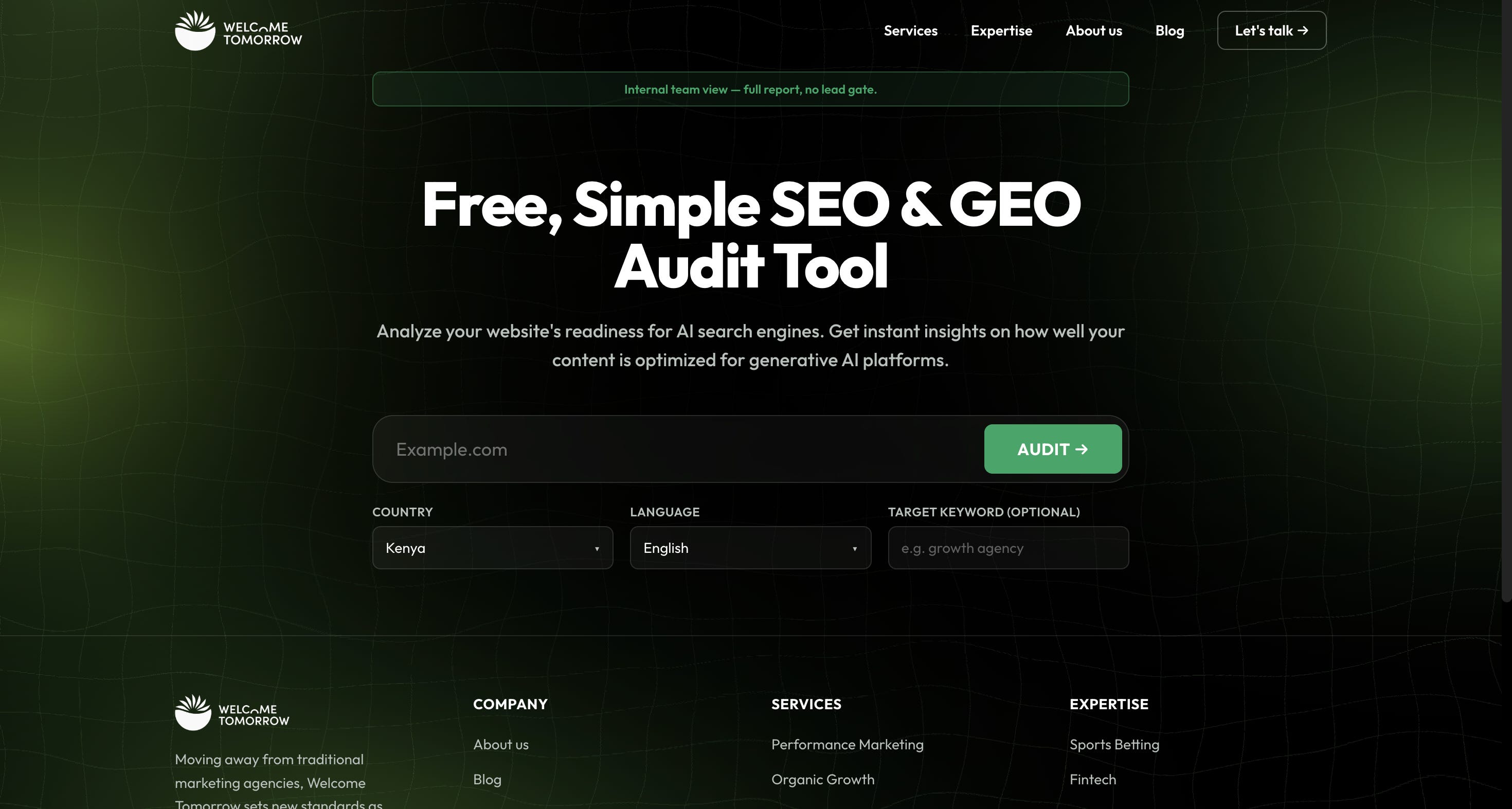
We did not just talk yesterday, we gave attendees an immediate solution to show them exactly where their website stands and what they need to do next.
That solution is RankTomorrow, and it is everything you need to know about your own AI visibility in one place.
It grades your website.
It tells you what is already working in your favour.
It flags the issues you need to sort out.
It gives you clear recommendations.
An AI visibility rating.
Your share of voice against competitors, and a lot more insight beyond that.
If you want to see where you actually stand, this is the tool to try.
If you were one of the 57, thank you again for showing up and asking the questions that made this worth writing. If you were not, there will be another one, and you should come.
Join Our Community👥
Come hang with us. Check out the blog, follow along on socials, and stay in the loop as we share the wins, lessons, and experiments shaping growth marketing today. 🤝🏾


PS: The really good stuff? You’ll find that on our TikTok. 👀😂
Got big goals? Good🤝🏾
Tell us where you are and where you want to be and we’ll help get you there.