

TL;DR:
Interest-based targeting is no longer doing the heavy lifting, your creative is.
Meta rolled a new metric called Creative Similarity that will penalise ad sets that look too alike.
Changing your hook text or background colour doesn’t count as a new creative.
To register as distinct, you need to change at least two structural elements.
The advertisers who build real creative variety into their workflow will pay less and reach more.
3 events. 3 cities (Nairobi, Joburg, Cape Town). We’re also hiring.
Since the Andromeda update (that you can read more about here), Meta’s algorithm has been doing more of the audience-finding work itself. Which sounds great in theory. The catch is that it now relies almost entirely on your creative to figure out who to show your ads to and if your ads all look the same, it doesn’t have much to work with.
What actually changed?
Let’s get into how it used to work.
You’d build an audience, interests, behaviours, demographics and your creative just had to be good enough to convert the people you’d already targeted. The audience was doing most of the heavy lifting.
That’s not really how it works anymore. Meta’s system now reads your creative and uses it to find the right people. The ad itself is the targeting signal.
Which means two things. First, your creative quality matters more than it ever has. Second — and this is the part most people miss — your creative variety matters just as much.
Defining "Creative Diversity"
To synthesise what we mean by diversity, it covers three main areas:
Marketing Angles: Selling the same product but via different approaches (e.g., one ad focuses on a specific problem, while another focuses on the desired benefit/state).
Ad Formats: Using a mix of video, carousels, or static images.
Ad Concepts: Using different styles such as UGC (User Generated Content), FGC (Founder Generated Content), street interviews, raw image carousels, or highly designed/Photoshopped static images.
Why does Meta want this?
Because Meta’s AI is now powerful enough to “read” the entirety of your ads. It knows how to show specific ads to the people most likely to consume them.
For example, within an audience interested in photography, some people prefer 30-second videos, while others prefer static images or studio-quality production. Advertisers with a varied “ad park” generally pay less and see better profits.
Creative Similarity is coming and it will cost you
Meta has rolled out a metric called Creative Similarity. The idea is straightforward: if your ads look too much alike, you get penalised. Higher costs per result, restricted reach, or both.
Here’s how it works:
It compares every ad within an ad set.
It averages the scores to calculate the similarity of the entire set.
It is based on static ads active over the last 28 days.
It excludes Advantage+ Catalog ads (since those are auto-generated from your Shopify/e-commerce feed).
If your score is too high, you face two problems: limited distribution or higher costs than your competitors.
What actually counts as a “new” creative?
Meta’s system now reads the full anatomy of your ad. To help you identify if your ads are too similar, here are the criteria provided by a high-level Meta account manager.
Elements of a Creative:
The Opening Shot: The first 3 seconds of a video.
Framing, Decor, and Lighting.
Gestures, Energy, and Pace of Cuts.
Narrative Structure: What you say and in what order.
Product Presence.
Voice and Intonation.
And just to be clear, these don’t count:
❌ Changing only the hook text.
❌ Only changing the music.
❌ Trimming or adding a few seconds.
❌ Reordering scenes. (the AI recognises the visual material and sees it as a "reassembly")
Why this is more expensive than it looks
The obvious hit is your reported numbers looking worse than they should, which pushes you to pull budget from campaigns that are actually working.
The sneakier problem is what it does to the algorithm. Meta uses your creative performance to figure out who to show your ads to next. Give it a narrow, repetitive creative pool and it’s essentially guessing. It snowballs from there.
Weak creative variety leads to worse distribution, worse distribution pushes CPAs up, higher CPAs make the channel look inefficient. Meanwhile the actual problem was just that your ad set needed more variety.
Got a winning ad? Here’s how to stretch it properly
You don’t need to scrap what’s working. You just need to branch it out.
✅ Reshoot the opening. Same concept, different entry point. New framing, new energy, different positioning. That’s the biggest lever you have.
✅ Branch the narrative. If your main angle is “save time,” what’s the sub-angle? “What this is actually costing you every week.” “Why your competitors are pulling ahead.” Same product, genuinely different conversation.
✅ Go longer… but actually longer. Trimming a few seconds off doesn’t register. Moving from a 10-second version to a 30 or 60-second one does. It also reaches different people, the ones who skim and the ones who actually watch.
Realistically, most ad accounts have this problem without knowing it. And it’s usually fixable faster than you’d think.
🗓️ Upcoming Events
1. App Growth Summit Africa 🇿🇦
Perfect for product, marketing, and tech teams building and scaling apps across Africa.

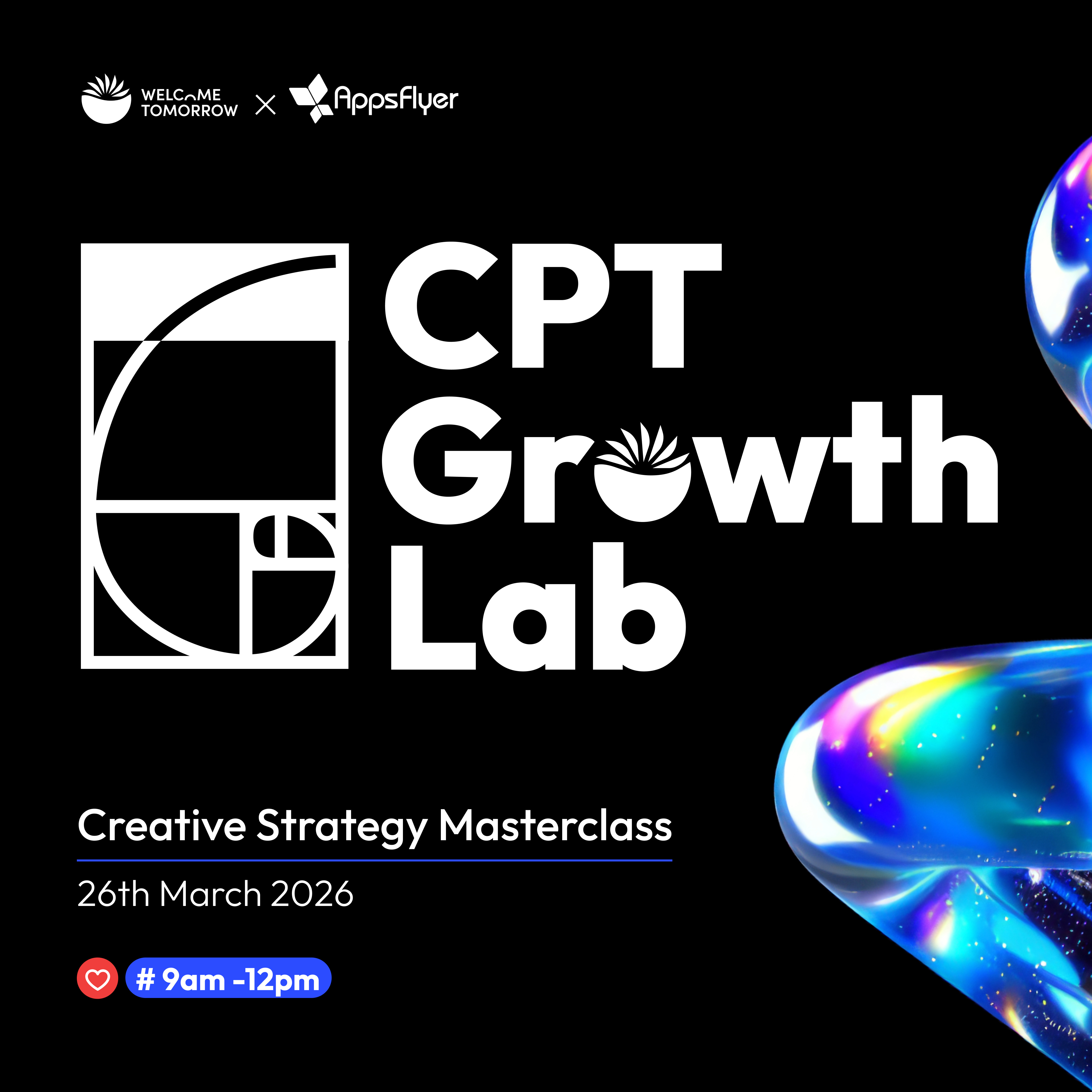
2. Growth Lab Cape Town: Creative Strategy Masterclass 🇿🇦
Best suited for marketers and growth teams looking to turn creative into a real performance driver.
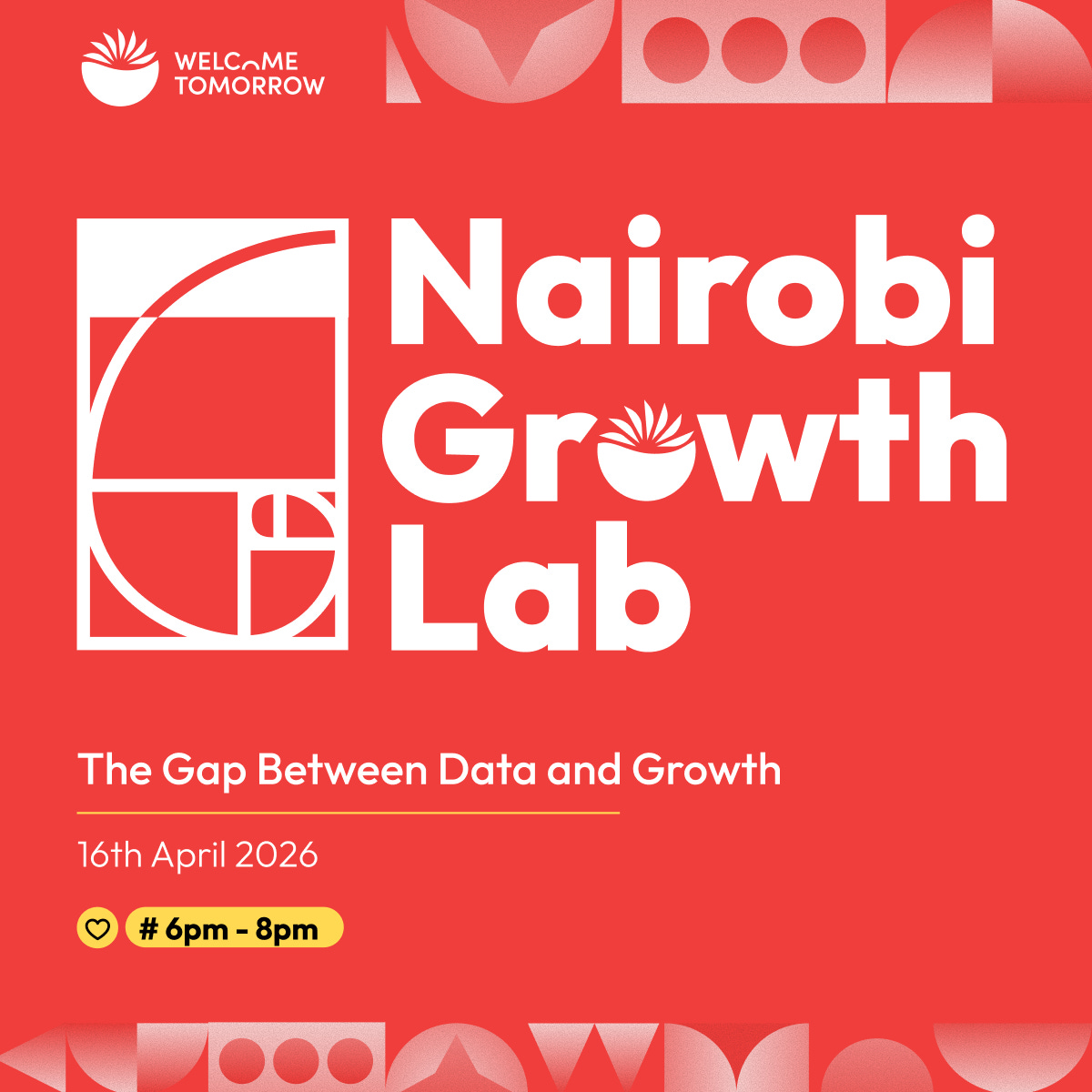
3. Growth Lab Nairobi : The Gap Between Data & Growth 🇰🇪
A good fit for marketers navigating messy attribution and unclear metrics, and looking for clarity on what to trust and act on.
We’re Hiring 🚀
Know someone great? Send them our way.
Join Our Community 👥
Come hang with us. Check out the blog, follow along on socials, and stay in the loop as we share the wins, lessons, and experiments shaping growth marketing today. 🤝🏾
PS: The really good stuff? You’ll find that on our TikTok. 👀😂


Got big goals? Good 🤝🏾
Tell us where you are and where you want to be and we’ll help get you there.