

TL:DR
Let performance guide your decisions. Don’t pause winning ads because the team is bored or keep expensive UGC running simply because you paid a lot for it.
Give Meta room to learn with broader audiences, automated placements and fewer, properly funded ad sets.
Create for the full funnel, match your campaign objective to the outcome you want and measure genuine new-customer acquisition.
Upcoming events: Join us in Nairobi for a Creative Strategy Masterclass with AppsFlyer, or in Cape Town for a Growth Lab on turning data and attribution into better decisions.
Over the past five years, we’ve worked inside Meta accounts for some of Africa’s most ambitious brands. Different industries, budgets, markets and stages of growth. Different products, audiences and creative approaches.
But somehow, the same mistakes keep showing up.
Some are easy to spot. Others look completely harmless while quietly making acquisition more expensive.
We’ve pulled together ten of the most common ones.
Let’s get into them, shall we? 😊

Mistake #1: Pausing a winning ad because you’re tired of seeing it
You’ve reviewed every frame. It appears in every performance report. Your team can probably recite the opening line from memory.
Naturally, it feels old to you.
But that is an internal feeling, not a performance signal. Most of your audience has not seen the ad nearly as many times as your team has.
If the CPA is stable, conversions are coming in and frequency is still healthy, leave it alone. Test new ideas alongside it and only replace it when the numbers show genuine fatigue.
Your team being bored is not a metric.
Mistake #2: Letting poorly performing creative run
You paid good money for that UGC content.
There were creator fees, product deliveries, production time, editing and approximately 37 WhatsApp messages to get the final video approved.
So, naturally, switching it off after launch feels painful.
But the money has already been spent. Keeping an ineffective ad live will not earn it back. It simply turns expensive creative into even more expensive creative.
Judge every ad according to the job it was designed to do. If it misses its agreed performance threshold, take the learning, pause it and move the budget towards something with more potential.
Mistake #3: Designing your creative for the hook rate
A strong hook can stop someone from scrolling, but attention alone is not the goal.
The problem comes when the opening creates curiosity that has very little to do with the product. People may keep watching, but not necessarily because they are interested in what you are selling.
The best hooks introduce a real problem, benefit or promise that the rest of the ad delivers on.
Hook rate, hold rate and CTR are useful for understanding where people lose interest. But a good hook only opens the door. The rest of the creative still has to give the right person a reason to walk through it.
Mistake #4: Only producing BOFU creatives
Some accounts have no hello, no introduction and no context.
Just: BUY NOW.
Discount codes, urgency banners and product shots work for people who are already close to converting. They do very little for someone who has never heard of the brand.
Your creative needs a mix:
Top-of-funnel: Earn attention and introduce the problem.
Mid-funnel: Build trust, demonstrate value and answer objections.
Bottom-of-funnel: Give interested people a reason to act.
An account full of bottom-of-funnel ads is trying to close people it never properly introduced itself to.
Mistake #5: Still relying on rigid targeting
The media buyer of 2020 would probably be horrified by this, but the days of building 15 tiny audiences are fading.
One percent lookalikes. Layered interests. Extremely specific demographic combinations.
Meta’s delivery system has become much better at identifying likely customers within broader audiences. With Andromeda, creative plays a much bigger role in helping the system decide which ad is relevant to each person.
The shift is simple:
From “Who should see this ad?” to “Which ad should this person see?”
Broad targeting does not mean having no strategy. It means letting strong creative do more of the targeting for you.
Mistake #6: Giving everyone $5 and hoping somebody learns something
Too many campaigns. Too many ad sets. Too many creatives.
Everyone gets a tiny slice of the budget, and nobody gets enough data to make a proper decision.
If your target CPA is $30 and a creative receives $5 per day, it takes roughly six days just to spend the equivalent of one target CPA.
Meta generally needs around 50 optimisation events within seven days for an ad set to exit the learning phase. With a heavily fragmented budget, some ad sets may never get close.
The fix does not require more money. Use the same budget across fewer, better-funded tests.
Mistake #7: Selecting placements based on vibes
“My audience is only on Instagram.”
Maybe. But have we tested that, or does Instagram just feel nicer?
Advantage+ placements allow Meta to distribute your ads across Feed, Stories, Reels and other available placements based on where it can achieve the best result.
Manual placements can make sense for brand safety, regulatory restrictions or creative that genuinely does not work in a particular format.
But “Facebook does not feel premium” is not a performance strategy.
Give Advantage+ placements enough time and budget to prove or disprove your assumption.
Mistake #8: Running Traffic campaigns when you need sales
Traffic campaigns are very good at finding people who click.
People who click are not automatically people who buy.
That is how you end up with a lovely CPC, hundreds of website visits and very little revenue. The report looks healthy. The business remains unconvinced.
Traffic is not always the wrong objective. It works when website visits are genuinely the goal.
But if you want sales, leads or app installs, choose the objective that matches that outcome.
Optimising for the wrong thing cheaply is still optimising for the wrong thing.
Mistake #9: Retargeting everyone with the same offer
Someone who abandoned their cart yesterday should not receive the same message as someone who viewed one page three weeks ago.
And sending “20% off your first order” to someone who completed a full-price purchase yesterday is, frankly, a little rude.
Build retargeting around intent and recency.
At minimum, distinguish between recent high-intent visitors, lower-intent website visitors, cart abandoners and existing customers.
The message should reflect what each group has already done and what might be stopping them from taking the next step.
Just avoid turning a small audience into 17 tiny ad sets. Useful personalisation is the goal, not unnecessary complexity.
Mistake #10: Calling retargeting “acquisition”
Meta will naturally look for the easiest available conversion.
That often means recent visitors, warm leads and past customers. These people already know you, so converting them is easier than finding someone completely new.
This can make your acquisition performance look much healthier than it really is.
You do not always need separate campaigns. Smaller budgets may benefit from consolidation. But you should still be able to answer one simple question:
How many genuinely new customers are we acquiring, and what are we paying for them?
Retargeting helps you convert existing interest, while acquisition brings new customers into the funnel. Both matter, but they are doing different jobs.
🗓️ On the Event Calendar
🇰🇪 Nairobi Growth Lab: Creative Strategy Masterclass
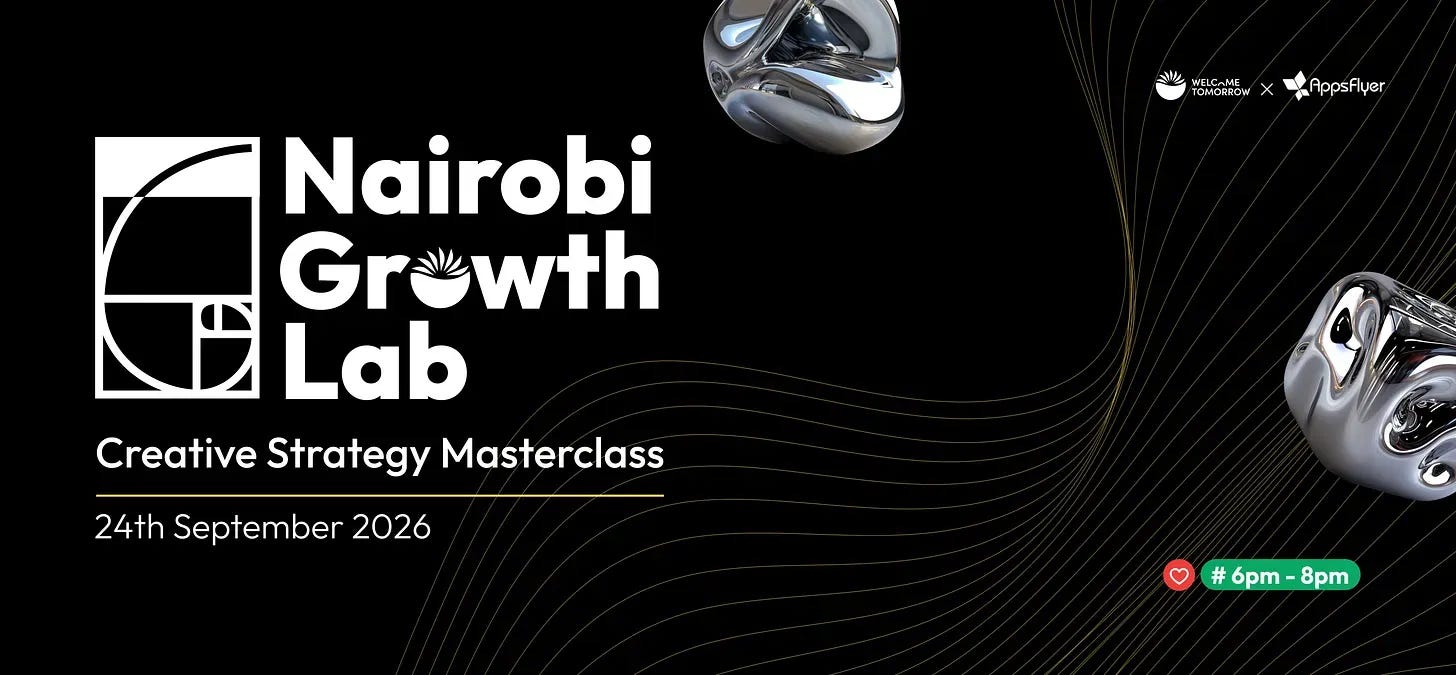
On 24 September 2026, Welcome Tomorrow and AppsFlyer are bringing Nairobi’s marketing community together for a practical Creative Strategy Masterclass.
We’ll get into what makes creative actually perform, how to test ideas properly and how to turn every result into a smarter next move. With AppsFlyer joining the conversation, we’ll also look at how creative influences mobile performance beyond the click, from installs and activation to retention.
🇿🇦 Cape Town Growth Lab: The Gap Between Data & Growth
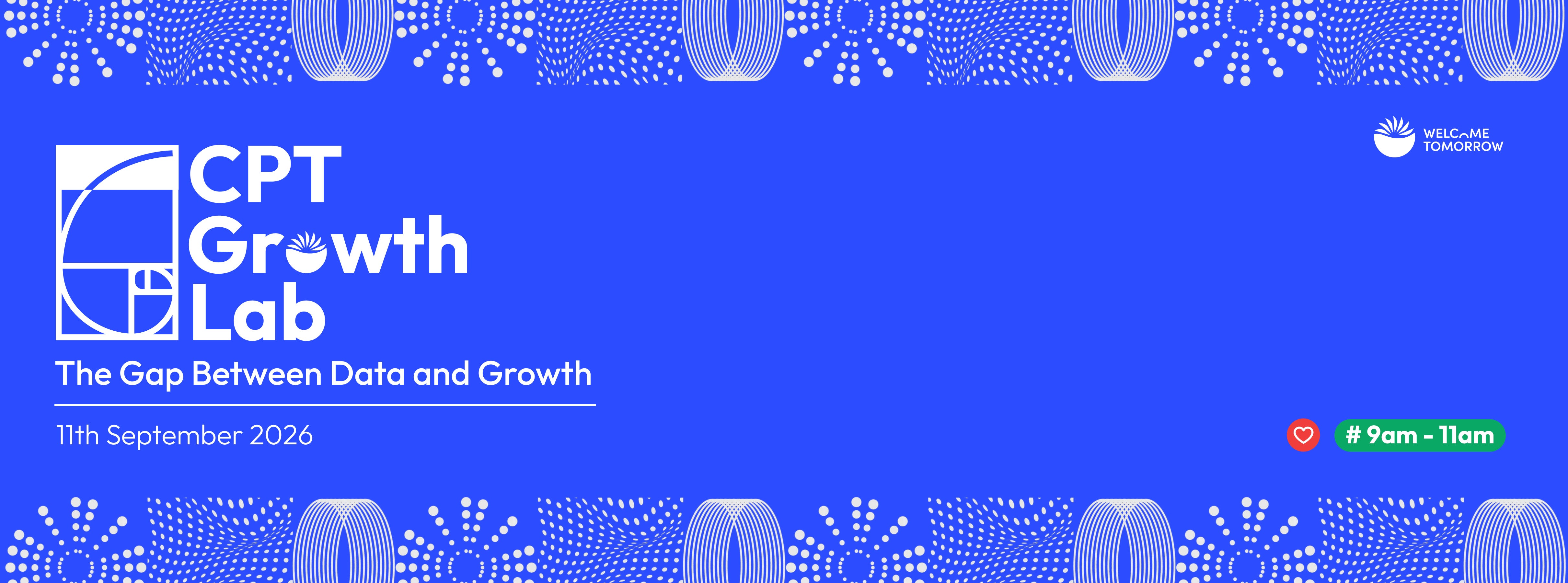
If you’re in Cape Town, we’re taking the data conversation offline at our next Growth Lab.
Every team has more data than ever: dashboards, reports and attribution tools. Yet the decisions that actually drive growth are still difficult to make.
We’re unpacking why that gap exists, what attribution can and cannot tell you, which metrics create more noise than clarity, and how to turn data into insight your team can actually act on.
How’d you like this week’s newsletter?
Click to vote. We’ll use your feedback to improve the next one.
Join Our Community👥
Come hang with us. Check out the blog, follow along on socials, and stay in the loop as we share the wins, lessons, and experiments shaping growth marketing today. 🤝🏾


PS: The really good stuff? You’ll find that on our TikTok. 👀😂
Got big goals? Good🤝🏾
Tell us where you are and where you want to be and we’ll help get you there.